Quantum Computing: A Double-Edged Sword
January 2026 marks a critical turning point in cybersecurity as quantum computing enters the mainstream. While this technology promises to revolutionize processing power, it simultaneously poses unprecedented risks to current encryption standards.
Who Is Affected?
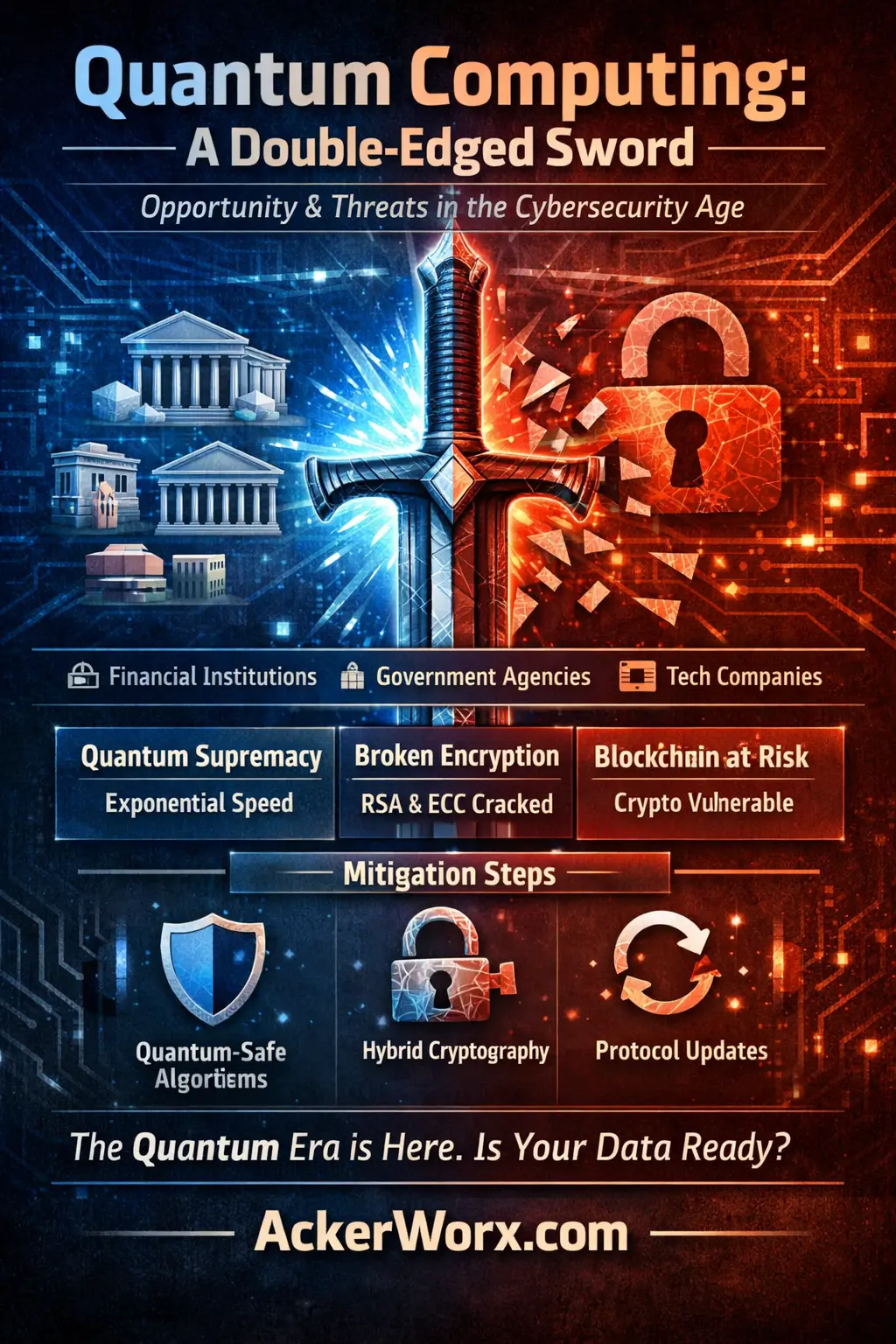
Organizations relying on traditional cryptographic systems (e.g., RSA, ECC) are at significant risk. Financial institutions, government agencies, and tech companies are primary targets.
Technical Details
Quantum Supremacy: Quantum computers can solve complex problems exponentially faster than classical computers.
Encryption Vulnerability: Algorithms like RSA and ECC are vulnerable to Shor's algorithm, which can factor large numbers efficiently.
Impact on Blockchain: Quantum threats jeopardize blockchain integrity, risking cryptocurrency security.
Mitigation Steps
Adopt
quantum-resistant cryptography(algorithms that withstand quantum attacks).Implement hybrid systems combining classical and quantum cryptographic methods.
Regularly update cryptographic protocols and stay informed on NIST's post-quantum cryptography standards.
Broader Context
The race to develop quantum-resilient systems is intensifying. Countries and corporations are investing heavily in research to secure digital infrastructure against quantum threats.
As one researcher noted, "The quantum era is here, and it's reshaping the cybersecurity landscape faster than anticipated." Ensuring data protection in this new paradigm is paramount.
Share this article
Stay ahead of the threat
Breaking news, advisories and field reports from AckerWorx, straight to your inbox.